Showing posts with label trees. Show all posts

Friday, 22 July 2011

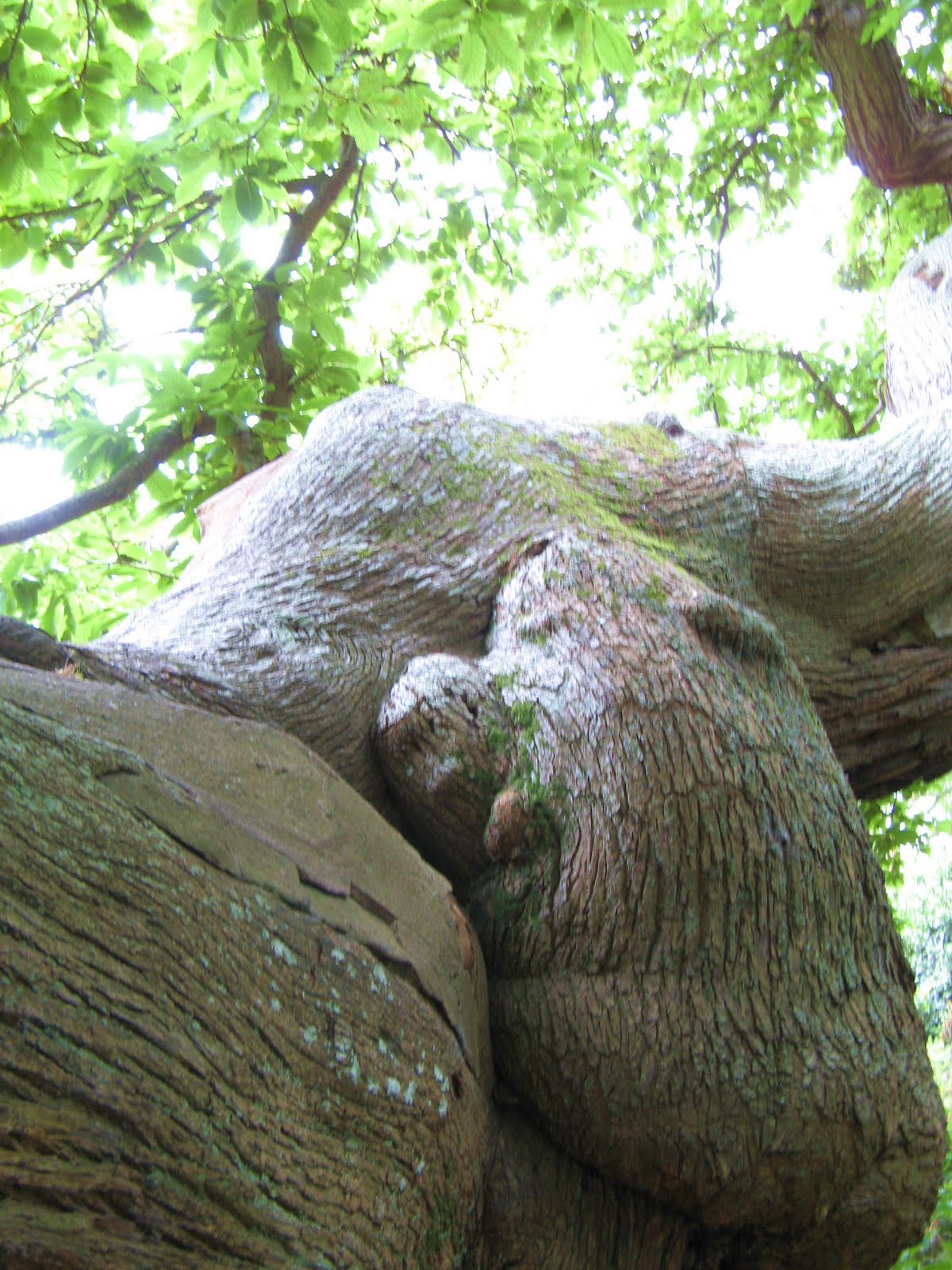
The Balmerino chestnut

Like the first monks I came to Balmerino in Fife on foot. Unlike them I had walked only a few miles along the coast, carrying nothing but a packed lunch and a camera. They came across open country all the way from Melrose, bringing the religious trappings they needed to found a new Cistercian monastery. No doubt they had beasts and covered carts and plenty of help from the lay community. And they had their unswerving faith in those early days. Nevertheless, in 1227 it would have been quite a trek. But then, unlike me, they came at the behest of a queen.


The story goes that Ermengarde de Beaumont, widowed queen of William the Lion and the Abbey's founding patron, planted a Spanish chestnut tree on the site to mark the occasion. It is tempting to believe the story that the tree growing in the grounds today is Ermengarde's gift to her new monastic community. If true, that would make it some eight hundred years old. Sweet chestnuts are certainly confirmed as living to that age in other places. Some Corsican specimens are said to have lived for a milennium. Sadly the tired old giant at Balmerino is likely to be only half that age. Ironically, that would have seen it planted around the time of the Abbey's demise during the Dissolution.


Supported by props, the scars of past amputations patched over with mortar, the Balmerino chestnut could almost be a metaphor for the ruined Abbey itself. The little that remains of this always small, never wealthy, daughter house of Melrose is presently off limits, deemed unsafe by its keepers, Historic Scotland, for clambering visitors. The hope one day is that sufficient funds will be raised to stabilise the masonry that survives and allow full access. Meanwhile, the Balmerino chestnut lives on, instilling a sense of secular awe in latter day pilgrims like me.

Tuesday, 24 May 2011

A thought for the trees

An unusually deep depression has swept across the northern British Isles today, unusual for this time of year at least. The time-lapse satellite images are beautiful to watch, an elegant spiral unwinding on a west to east trajectory, like the captivating pictures of distant galaxies or those mysterious traces left by sub-atomic particles spinning off from collisions in a nuclear accelerator.  The whorls of clouds look peaceful and just like the shots of galaxies and smashed atoms they give no sense of the mayhem being wreaked within. No wonder the spiral has been such a potent symbol throughout human history.

Winds have gusted at close to 100 miles per hour in exposed parts of Scotland, bringing a predictably dismal story of commuter chaos and disrupted power supplies. My own evening journey was several hours longer than usual and only made possible at all by the generosity of friends providing a relay of lifts. We arrived home tired and hungry but it was a temporary inconvenience which by tomorrow will be told of as an adventure.

It is the trees I feel saddest about. The streets and gardens are littered with shredded leaves and dismembered limbs. There are fractures and raw wounds everywhere. Many tired old specimens have been uprooted completely. Storms in winter, though often fiercer, tend to cause less damage. The trees are bare and the sap has retreated. A brittle branch may be sacrificed, snapped off to save the whole, but the body survives and repairs. By May even the late trees are in full leaf, weighed down with primavera foliage. Winds like today's may be too much for them to withstand.

Tomorrow, as train timetables get back to normal and television channels are restored, we should pay our respects to the lost trees. We can all bend only so far.